
Choosing an image for the heating-oil cost story
Show the fuel tank, the household and the purchasing decision when illustrating winter heating costs.
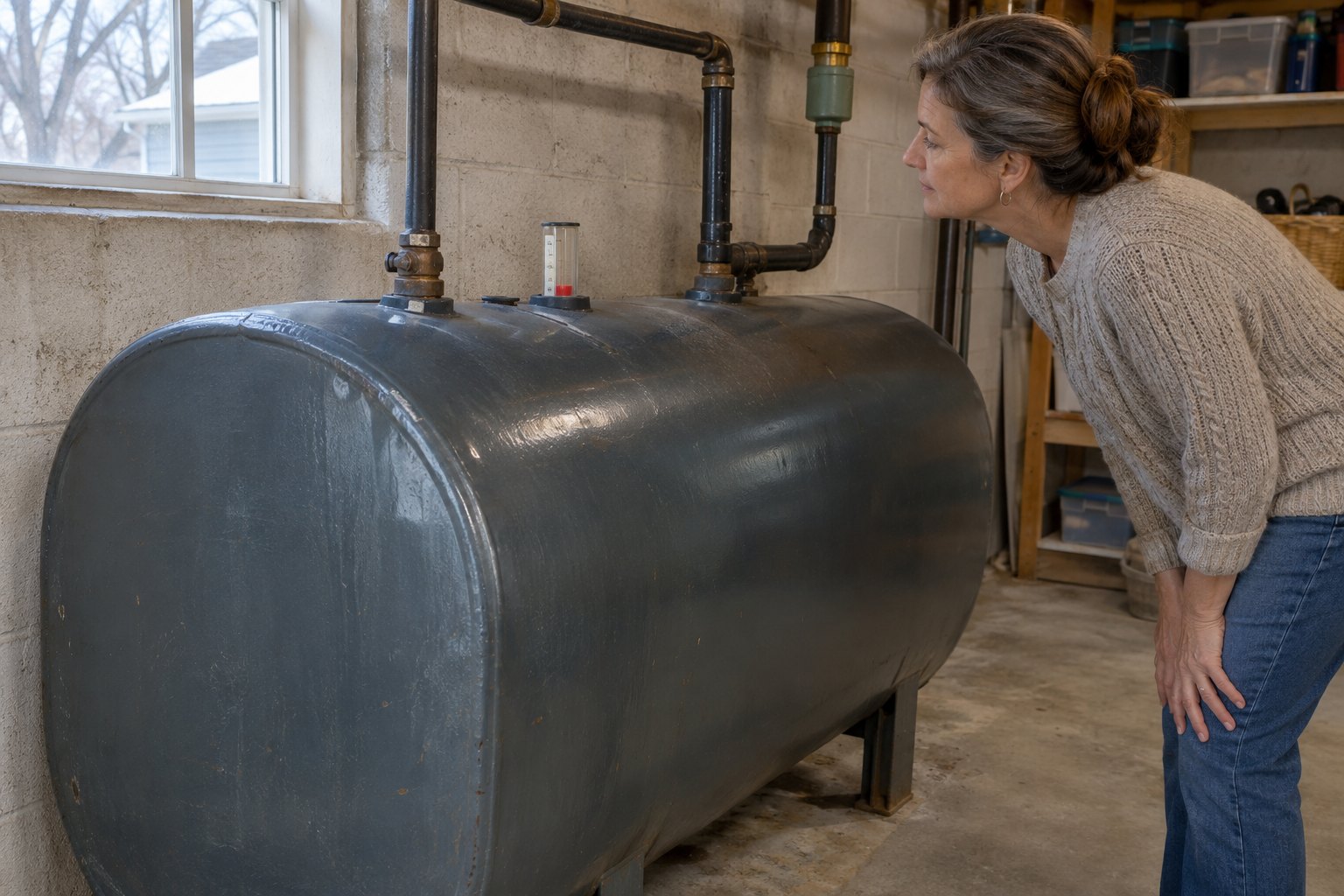
A household that heats with oil has a physical inventory to keep track of. Before the next delivery, someone may check the tank, consider how much fuel remains and decide what to order. That gives an editor a concrete way to illustrate heating costs.
A thermostat communicates temperature. A delivery truck communicates supply. A person reading the gauge connects the story to the household that has to make the purchase.
The U.S. Energy Information Administration’s October 2026 Winter Fuels Outlook forecast that households using heating oil would spend about 21 percent more on the fuel during the 2026–27 winter than the previous winter. That was a forecast, not a statement about every household’s bill. Weather, consumption and local prices affect the actual expense. [1]
Choose the moment that matches your story
An article about ordering fuel needs different imagery from a maintenance guide. For the first, the tank and the person assessing it should be visible together. For the second, a qualified technician examining equipment may be more appropriate. An assistance-program page might need an approachable household scene with space for information about applying.
The accompanying illustration focuses on the gauge check. The homeowner is alone, looking at the equipment without a phone or another person explaining it. The tank occupies much of the frame, so the subject remains recognizable when the image is reduced to a newsletter thumbnail.
It does not show the price of oil, prove that the tank is nearly empty or establish that the homeowner cannot afford a delivery. Those meanings belong in the article and caption only when they are supported. A calm expression can work across a wider range of stories than a deliberately distressed one.
Brief the actual home, not a generic energy concept
When requesting a variation, specify whether the tank is indoors or outside, how much of the room should be visible and whether the person is a homeowner or a delivery professional. A supplier serving a particular region may need a setting familiar to its customers.
The image should leave the gauge recognizable and avoid cropping away the tank’s identity. If a layout needs a headline over the photograph, request a composition with additional wall space rather than placing type over the equipment or the subject’s face.
For a technical installation guide, use verified equipment photography or a drawing checked by a qualified professional. A generated scene is better suited to general editorial and marketing use than to showing readers how a tank should be installed.
Need a different setting? Describe the household, tank location and intended use when requesting a heating-oil image from PhotoStock.