
Showing the checks behind a hardware shipment
A physical equipment check can support an export-compliance story, but the caption must explain what the photograph cannot.
An export-compliance story can be difficult to illustrate. The decisive information may be a customer’s identity, the destination of a shipment or what the equipment will be used for. None of those facts is necessarily visible on the hardware.
The U.S. Bureau of Industry and Security provides guidance on end-user and end-use controls, including circumstances in which those factors can affect licensing requirements. [1] That makes shipment verification a relevant subject for business coverage, although scanning a serial number is only a small physical part of a much larger review.
For image buyers, the task is to make the equipment and the act of checking it recognizable without pretending that the photograph proves compliance or wrongdoing.
Start with the object being verified
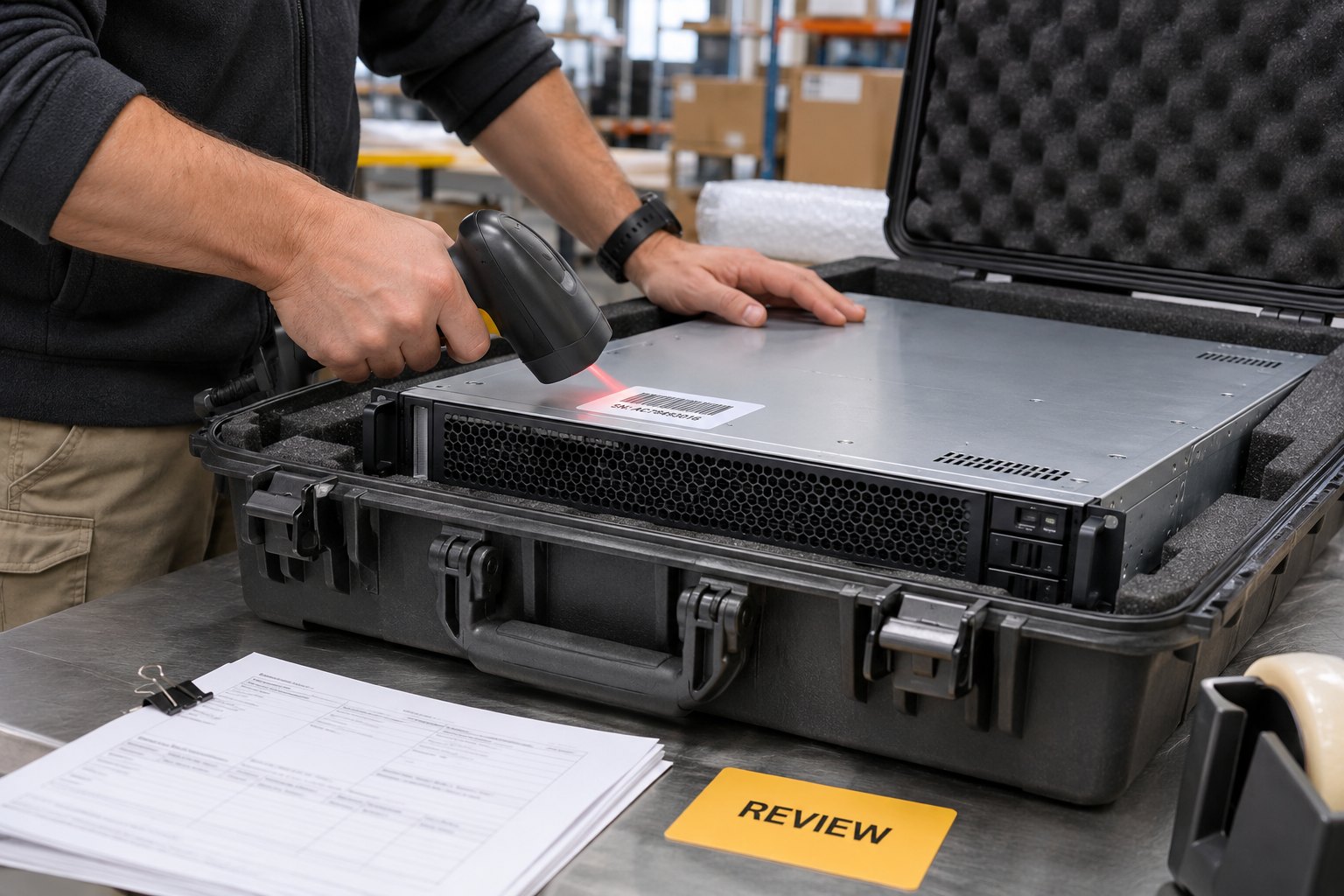
The accompanying illustration shows a worker scanning a serial label on rackmount computing equipment in a protective shipping case. Paperwork and a small “REVIEW” card establish that the shipment is being examined. The tight framing keeps attention on the hardware and the worker’s hands.
It could accompany an explainer about shipment controls, equipment identification or electronics logistics. With a clear caption, it can also support a broader article about export checks. It does not identify the server’s capabilities, establish that it contains a particular artificial-intelligence accelerator or show that a license is required.
That distinction matters. Ordinary electronics logistics and export-compliance work can look almost identical. A picture cannot supply the legal or technical context simply because a caption includes the words “AI chips.”
Avoid visual accusations
A review card should not be treated as evidence of an illegal transaction. Likewise, flags, government seals or recognizable company branding can imply a specific destination or enforcement action that a fictional scene cannot support.
For reporting on a named company, actual shipment or particular processor, use authenticated material when the identity is central to the story. A generated illustration is more suitable for explaining a general workflow than documenting an event.
When briefing a custom image, specify whether the subject is physical dispatch, customer screening or a decision to release equipment. These may require different pictures. A dispatch scene can show cases and labels; an approval decision will usually depend more heavily on text or a deliberately designed document.
PhotoStock can build a general hardware-verification scene around the intended page layout and audience. Include the equipment type, the action and any details that need to remain fictional. The result should help the reader understand what is being checked while leaving legal conclusions to the reporting.