
Illustrating a food recall: show the lot check
A lot-code check and a designated hold area make the operational side of a food recall visible.
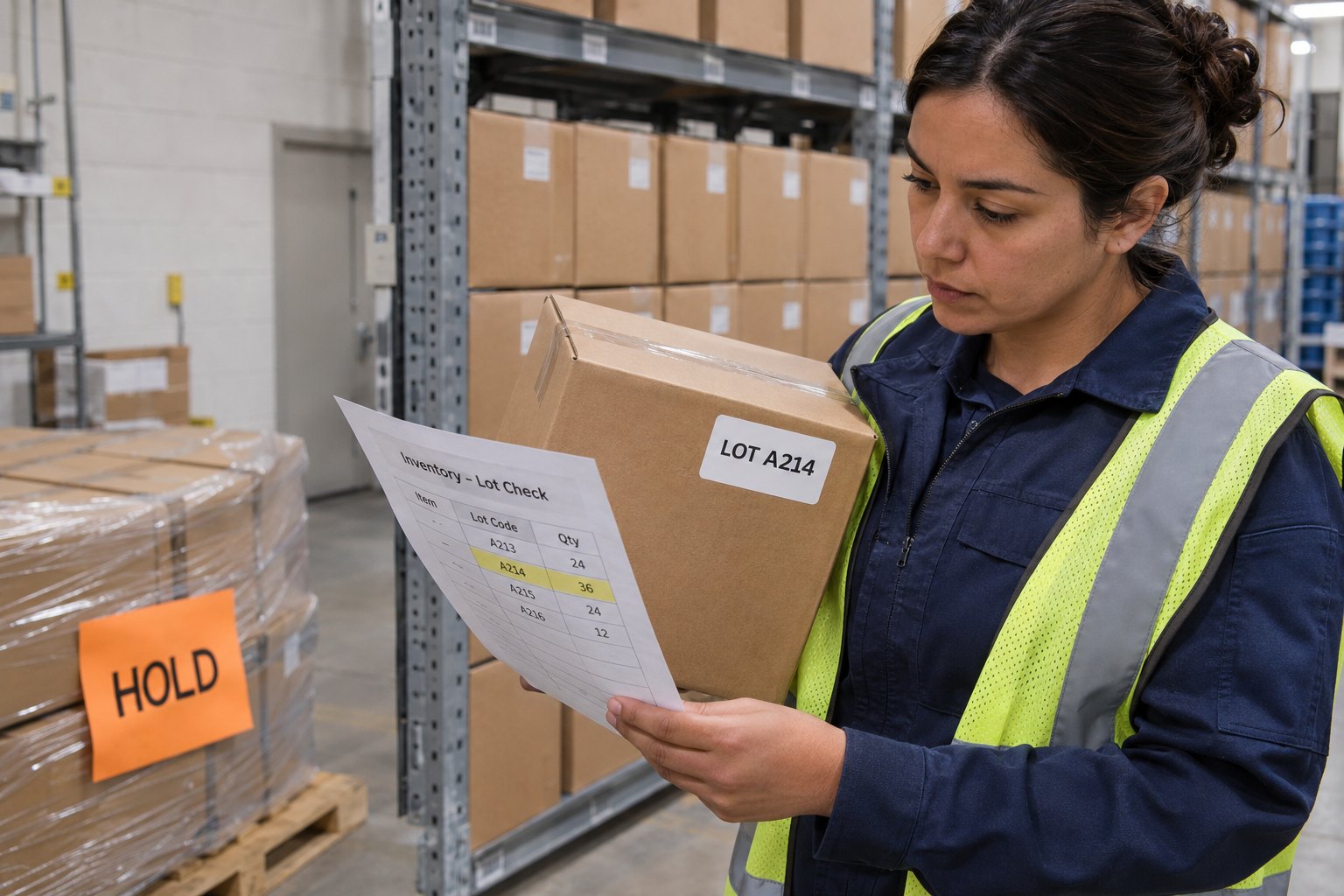
A food recall begins to look different when the story moves into a stockroom. Someone has to identify the relevant inventory, check its codes and keep affected goods from continuing through the distribution process.
A warning symbol can announce the topic. A lot check shows a piece of the work.
The Food and Drug Administration explains that recall notices may identify products through their names, packaging, product codes, lot codes and dates. [1] Those details matter because visually similar packages can belong to different production runs. An image for an operational article should give the viewer something more specific than a supermarket aisle.
Make the identifying detail readable
The accompanying illustration shows a worker comparing a carton labeled “LOT A214” with a fictional inventory sheet. A separate pallet has a “HOLD” tag. The visual relationship is simple: a physical product, a record and goods that have been set apart.
This can work for an article about recall readiness, a supply-chain software page or an introduction to inventory controls. The illustration does not depict an actual recalled product. The hold tag also does not, on its own, establish why the goods are being held; a business may place inventory on hold for several reasons.
For a story about a named recall, use the official product information and appropriate authenticated product imagery. A fictional box should never be presented as the affected product. The generated example is intended to explain a general process without implying that a recognizable brand caused harm.
Choose the part of the process your reader needs
An inventory check is only one moment. A different article may need an employee separating affected cases, recording quantities or comparing the lot information on incoming and outgoing shipments. A retailer’s response may take place at a shelf; a manufacturer’s may take place in a warehouse.
Choose one main action for the image. A composition crowded with scanning, paperwork, warning signs and several people can make a straightforward task harder to read. In a small newsletter placement, the carton code and the worker’s attention may be enough.
For food-safety training, have a specialist review the details against the actual procedure. The illustration is not an operating instruction, and a generic scene should not imply a universal handling or disposal method.
When requesting a related image, describe the kind of facility, the packaging, the action and whether any codes must be legible. PhotoStock can use fictional products for a general illustration, keeping real brands and recall allegations out of the scene.